Hidden Objects - The Journey
- 4.5
- Rating
- 10.00M
- Installs
- Free
- Price

 Analysis by App-foxy
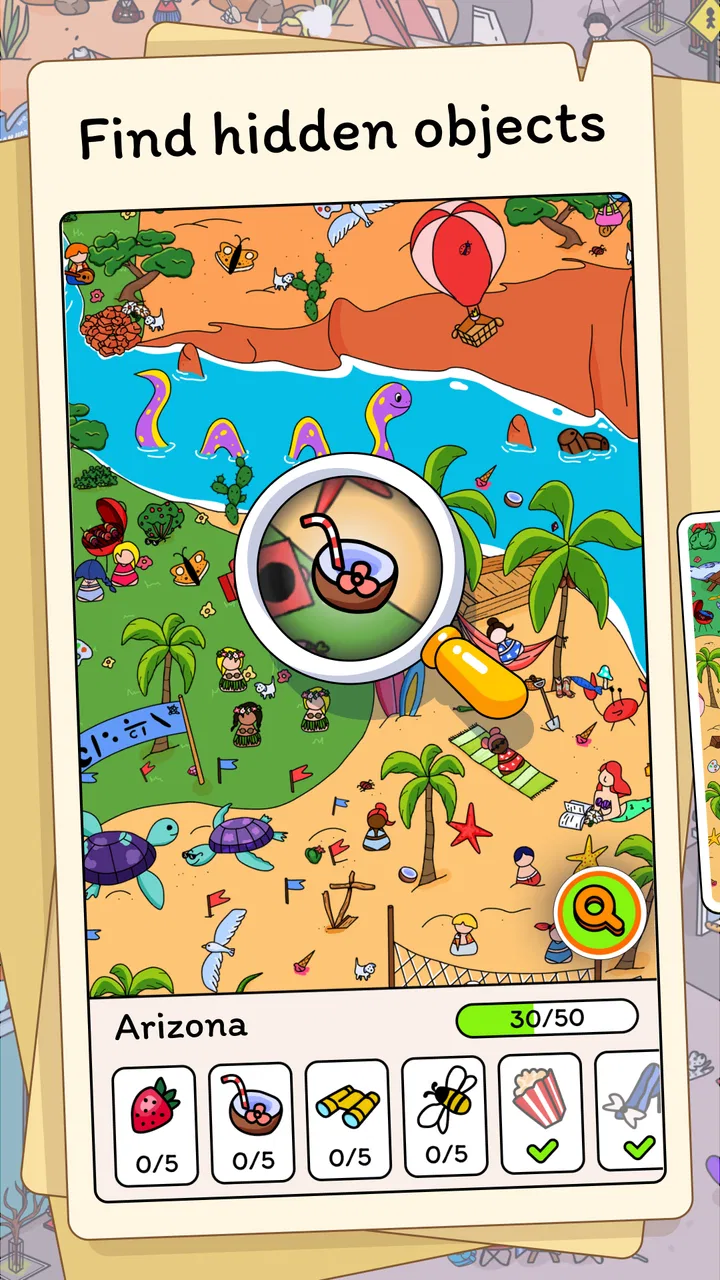
I approached Hidden Objects - The Journey as a quick puzzle game rather than something I would play for long, uninterrupted sessions. That distinction matters. Its basic appeal is easy to understand: each picture asks me to slow down, inspect the scene, and locate items that are blended into the artwork. The challenge is not fast reflexes or complicated controls. It is attention, patience, and the ability to stop looking at the whole image and start examining small details.
That makes it a natural fit for people who enjoy hidden-object puzzles and want a simple game for short breaks. I can imagine opening it while waiting for an appointment, taking a few minutes away from work, or sharing a level with a child who likes searching games. At the same time, it is not the best choice for someone looking for a story-heavy adventure, competitive play, or a puzzle system that keeps changing dramatically from one stage to the next.
How I Decide Whether This Puzzle Game Is Worth Keeping
My first test with a game like this is whether the search feels fair. A hidden item should be difficult because it is well placed, not because the picture is unreadable or the object is made needlessly tiny. I also look at how comfortable the game is during repeated searches. If I have to fight the interface, guess what the level wants, or spend more time dealing with interruptions than studying the image, the appeal wears off quickly.
You May Also Like

 Blood Strike: 2.5 Anniversary
Blood Strike’s Loadouts Turn Every Drop Into a Tactical Gamble
A close look at Blood Strike’s custom loadouts: how fast access to signature weapons reshapes its battle royale rhythm, rewards preparation, and narrows the gap between fights.

 Pandora - Music & Podcasts
Pandora’s Music Is Easy to Start, but Harder to Recover
Pandora’s strength is its low-effort path from a seed to a station. Its weak spot is how much confidence it asks you to place in connection, setup, and quiet recovery.

 8 Ball Pool
 Is Built on Rivalries, Rematches, and Routine
A close look at the rivalries, rematches, shared routines, and unanswered safety questions that turn a quick pool match into a persistent mobile community.

 Samsung Music
’s Quiet Strength Is Playing What You Already Own
Its reach comes less from spectacle than from dependable access to a personal library. That simplicity is both the app’s strongest retention engine and its ceiling.

 AccuWeather: Weather Radar
AccuWeather Review: A Quick, Clear Forecast for Everyday Decisions
For everyday plans, the best forecast is the one you can understand quickly. AccuWeather makes rain timing, radar, and local conditions easy to act on, with a few trade-offs.

 Hill Climb Racing
Why Hill Climb Racing Still Turns Crashes Into One More Run
A tiny car, a bumpy hill and one more upgrade: Hill Climb Racing keeps resurfacing because its simple chaos makes every near-miss feel personal.
More From Our News Desk



The second test is variety. Finding objects in one picture can be relaxing, but a full game needs enough visual change to keep the activity from becoming a routine scan. I pay attention to whether scenes encourage different approaches: sometimes checking the edges first, sometimes comparing shapes, and sometimes searching for an object whose color almost disappears into its surroundings.
The final question is personal value. A free game can be worthwhile even when it is modest, provided it gives me a pleasant way to fill spare minutes. It can also become frustrating if its progression or optional purchases make the uncomplicated idea feel more complicated than it needs to be. I found that this title is easiest to judge as a focused observation game, not as a broad all-purpose mobile adventure.
The basic search loop is immediately understandable
There is very little learning curve. I look over a scene, identify details that do not belong, and tap the objects I believe match the search. That simplicity is one of its strengths because I can hand the phone to another person without explaining a control scheme. It also makes the game approachable for younger players, casual users, and anyone who does not normally play games.
The important skill is not simply spotting a familiar shape. I have to adjust how I inspect the image. A useful method is to divide the picture into sections and move through them systematically instead of jumping randomly between interesting details. I usually begin with the corners and borders, then inspect crowded areas, repeated patterns, and objects that sit beside something with a similar color. This avoids the common mistake of staring at the center for too long.
Another practical habit is to change the scale of my attention rather than relying on one visual distance. I first take in the entire composition to understand where the busy areas are. Then I narrow my focus to one small region and compare shapes, outlines, and unusual gaps. When I get stuck, I stop searching for a specific object and instead ask which part of the image has not received a careful pass. That small change often works better than tapping everywhere.
Why the journey format works for short sessions
The journey framing gives the searches a sense of movement, even though the central activity remains the same. I do not need to commit to a long match or remember a complicated set of rules. A short session can feel complete after one successful search, while a longer session lets me continue when I am in the mood to concentrate.
This is especially useful on a phone because the game suits interruptions. If I put it down to answer a message or move on with my day, I have not lost the thread of a complicated story. The mental state I need is simply “look carefully,” which is easy to resume. For me, that makes it more practical than puzzle games that require a long chain of reasoning before a level makes sense.
There is also a quiet benefit for shared play. One person can hold the device while another points out possible locations, making a scene into a small cooperative activity. That works well with children or family members who enjoy visual searches but may not want a fast-paced game. I would still supervise younger players when needed, but the Everyone content rating makes the title broadly approachable.
Where it performs better than familiar puzzle alternatives
Compared with match-three games, this title asks for observation instead of repeated pattern clearing. That makes it a better choice when I want to use my eyes and attention rather than chase a score through quick moves. Compared with word puzzles, it does not depend on spelling, vocabulary, or knowing a particular language. A player can understand the objective visually, which makes the experience more accessible across different language backgrounds.
It also has a different rhythm from logic-grid or number puzzles. Those alternatives can offer deeper deduction, but they may require more uninterrupted concentration and can become mentally demanding. Here, the challenge is more immediate: inspect, compare, tap, and continue. I choose this game when I want a low-pressure search rather than a problem that I need to solve on paper in my head.
That simplicity is not automatically a weakness. For many players, the absence of complicated rules is the reason to return. The game occupies a useful middle ground between a toy and a serious brain teaser. I would recommend it to someone who wants a visual challenge that can be started without preparation.
Where Other Puzzle Styles May Be a Better Fit
Its focused design also creates clear limits. If I want puzzles with multiple solutions, a strong narrative, or a sense of discovery beyond the artwork itself, I would look elsewhere. Hidden-object play depends heavily on the quality and readability of the pictures. Once I have developed a reliable scanning routine, some stages may feel more like careful checking than fresh problem solving.
Players who enjoy speedrunning may also find the experience less satisfying than action-oriented puzzle games. The natural pace is deliberate. Rushing makes it easier to overlook an object, while the reward comes from noticing what was hiding in plain sight. Someone who wants constant movement, dramatic feedback, or competitive leaderboards should probably choose a different category.
There is a similar trade-off with games built around evolving mechanics. In a physics puzzle, for example, a new rule can change how every later stage works. In this game, the main action remains the search. The visual setting can change the mood, but I would not install it expecting a completely new type of challenge every few minutes.
Who should install it, and who should skip it
I think it is a good match for casual players, families looking for a calm shared activity, and adults who enjoy visual concentration without a steep learning curve. It can also suit someone who wants a screen break that feels more active than scrolling but less demanding than a strategy game. The free entry point makes it easy to try without treating the download as a major commitment.
I would be more cautious if you dislike repeated visual inspection, have difficulty distinguishing small details on a phone screen, or become annoyed when a puzzle depends on noticing something that blends into its surroundings. The game may also be a poor fit if you want a large amount of narrative context or a competitive reason to replay completed scenes.
Parents choosing it for a child should consider the device and the child’s patience. The Everyone rating is reassuring for general suitability, but a child who expects bright action and immediate rewards may not connect with a slow search. On the other hand, a child who loves “find it” books or picture puzzles may understand the appeal immediately.
Small techniques that make difficult scenes less tiring
My most useful approach is to create a repeatable sweep. I move from left to right, then lower the line of sight and continue until I have covered the full image. After that, I check the areas where objects naturally hide: behind visual clutter, near similarly shaped items, and along boundaries where the artwork changes color or texture. This is more reliable than repeatedly returning to the same obvious section.
I also try not to tap every suspicious mark as soon as I see it. First I form a shortlist of possible objects, then I compare each one with the target in my mind. That reduces random tapping and keeps the search from becoming a guessing exercise. When two shapes look alike, I look for the defining feature rather than the overall outline: a handle, a pointed end, a contrasting edge, or an unusual curve.
A third technique is to take a short pause instead of forcing the search. After staring at one scene, my eyes start treating familiar details as background. Looking away for a moment and returning with a fresh scan can reveal an item that was visible all along. This is a small but important trade-off: persistence helps, but endless concentration can make the picture harder to read.
What the free model means in everyday use
The game is free to download, which lowers the barrier for trying it during a spare moment. It includes in-app purchases ranging from $0.99 to $99.99 per item, so I would treat optional spending carefully rather than assuming every player will have the same experience. Before paying for anything, I would first decide whether I enjoy the core search loop enough to keep playing without assistance or extras.
My practical advice is to set a personal rule before a long session. I would avoid buying something simply because I am stuck on one picture, since frustration is exactly when an impulse purchase feels most tempting. If the game remains enjoyable when I take a break and return later, that is a better sign that it deserves continued attention. If I only want to continue after removing every obstacle, the purchase may be solving impatience rather than improving the game.
This is also where alternatives can have an advantage. Some puzzle games offer a one-time purchase or a different way to handle progression, while others are built around unlimited replay or user-created content. I am not saying those approaches are automatically better; they simply suit different expectations. Here, the sensible choice is to enjoy the free experience first and make any later decision based on how often I genuinely return.
Technical fit and what to expect from the current edition
The current version is 1.1.36, and the game runs on Android 8.0 or later. That makes the compatibility requirement fairly clear for anyone checking an older phone before installing. I would still consider screen size when making the decision. Searching detailed pictures is naturally more comfortable on a larger display than on a compact handset, especially during longer sessions.
SayGames Ltd is the developer behind the title. The game has reached over ten million installs and holds a 4.4 average from around 205 thousand ratings, with roughly three thousand written reviews. Those figures suggest that the straightforward hidden-object idea has found a substantial audience, but popularity should not replace a personal test. The central question remains whether you enjoy slow visual searching.
The game was released on March 5, 2023, and its age rating is Everyone. I see those details as useful context rather than reasons by themselves to install it. The release date does not tell me whether I will like the format, and a broad age rating does not guarantee that every child will find the pace engaging. The strongest indicator is still my response to the first few searches.
A realistic use case: a five-minute reset
Imagine that I have finished a task but still have a few minutes before the next one. I could open a social feed and lose track of time, or I could start a scene here with a clear stopping point. I scan the picture in sections, find several objects, pause when my attention slips, and either finish the search or leave it for later. That gives the break a small sense of purpose without turning it into another demanding obligation.
The same situation works during travel, although I would be mindful of battery use and surroundings rather than playing while walking. On a quiet train ride, the game can fill time without requiring sound or a stable internet conversation with another player. For a parent, a shared scene can also occupy a child while waiting, provided the child enjoys searching and the adult is comfortable with the game’s optional purchase model.
What I like about this use case is its flexibility. I do not need to prepare a strategy, memorize a story, or reach a checkpoint before stopping. What I do not like is that a particularly elusive object can turn a short break into an unexpectedly long stare. My solution is simple: if I have searched every section once carefully, I stop and return later instead of letting one scene dominate the whole session.
My Recommendation After Weighing the Trade-Offs
I recommend Hidden Objects - The Journey if you specifically want a free, approachable visual puzzle built around finding concealed items in illustrated scenes. Its strongest quality is clarity: I know what to do almost immediately, and the activity works for short sessions, quiet concentration, or cooperative searching with another person.
I would not recommend it as a universal puzzle game. Choose a logic, word, or action alternative if you need deeper deductions, changing mechanics, competitive pressure, or a stronger story. Those games may offer more variety for long-term players, while this one is more successful when treated as a focused observation pastime.
My final decision guide is straightforward. Install it when the idea of patiently scanning pictures sounds relaxing, especially if you want something suitable for a broad age range and compatible with an older Android device. Skip it when repeated searches feel tedious or when you expect every stage to introduce a new kind of puzzle. The right reason to keep this game is not its size or popularity, but the simple pleasure of noticing what you missed the first time.
FAQs for Hidden Objects - The Journey
01What is Hidden Objects - The Journey about?
Hidden Objects - The Journey is a captivating puzzle game where players embark on an adventure to find hidden items across various scenes. Each level presents a beautifully crafted environment filled with intricate details and cleverly concealed objects. The game combines engaging storytelling with challenging puzzles, making it a favorite among fans of the genre.
02Is Hidden Objects - The Journey suitable for all ages?
Yes, Hidden Objects - The Journey is designed to be family-friendly and suitable for players of all ages. The game features intuitive controls and a gentle learning curve, making it accessible for younger players while still offering enough complexity to keep adults engaged. Parents can feel confident that the content is appropriate for children.
03Does Hidden Objects - The Journey require an internet connection?
No, Hidden Objects - The Journey does not require a constant internet connection to play. This makes it an excellent choice for those who enjoy gaming on the go or in locations where connectivity might be limited. However, an internet connection may be needed for downloading updates or accessing additional content.
04Are there in-app purchases in Hidden Objects - The Journey?
Yes, Hidden Objects - The Journey offers in-app purchases. Players can buy items such as hints, new levels, or customization options to enhance their gaming experience. While these purchases can provide conveniences, they are entirely optional, and players can enjoy the full game without spending any money.
05What platforms is Hidden Objects - The Journey available on?
Hidden Objects - The Journey is available for both Android and iOS devices. It can be downloaded from the Google Play Store for Android users and the Apple App Store for iOS users. The game is optimized for both smartphones and tablets, ensuring a seamless experience across different devices.
Pros
- Engaging storyline with mysterious twists.
- Beautifully detailed graphics enhance immersion.
- Challenging puzzles keep you entertained.
- Variety of levels offers long-lasting gameplay.
- User-friendly interface simplifies navigation.
Cons
- In-app purchases can be expensive.
- Occasional ads disrupt gameplay flow.
- Requires constant internet connection.
- Some levels feel repetitive and tedious.
- Limited hints can frustrate new players.

Hidden Objects - The Journey
Gallery